
Nãm - Urban Mushroom Farm
Polar chart of the good practice's contribution to the 17 SDGs. The radius length corresponds to the relative benefit for each SDG.
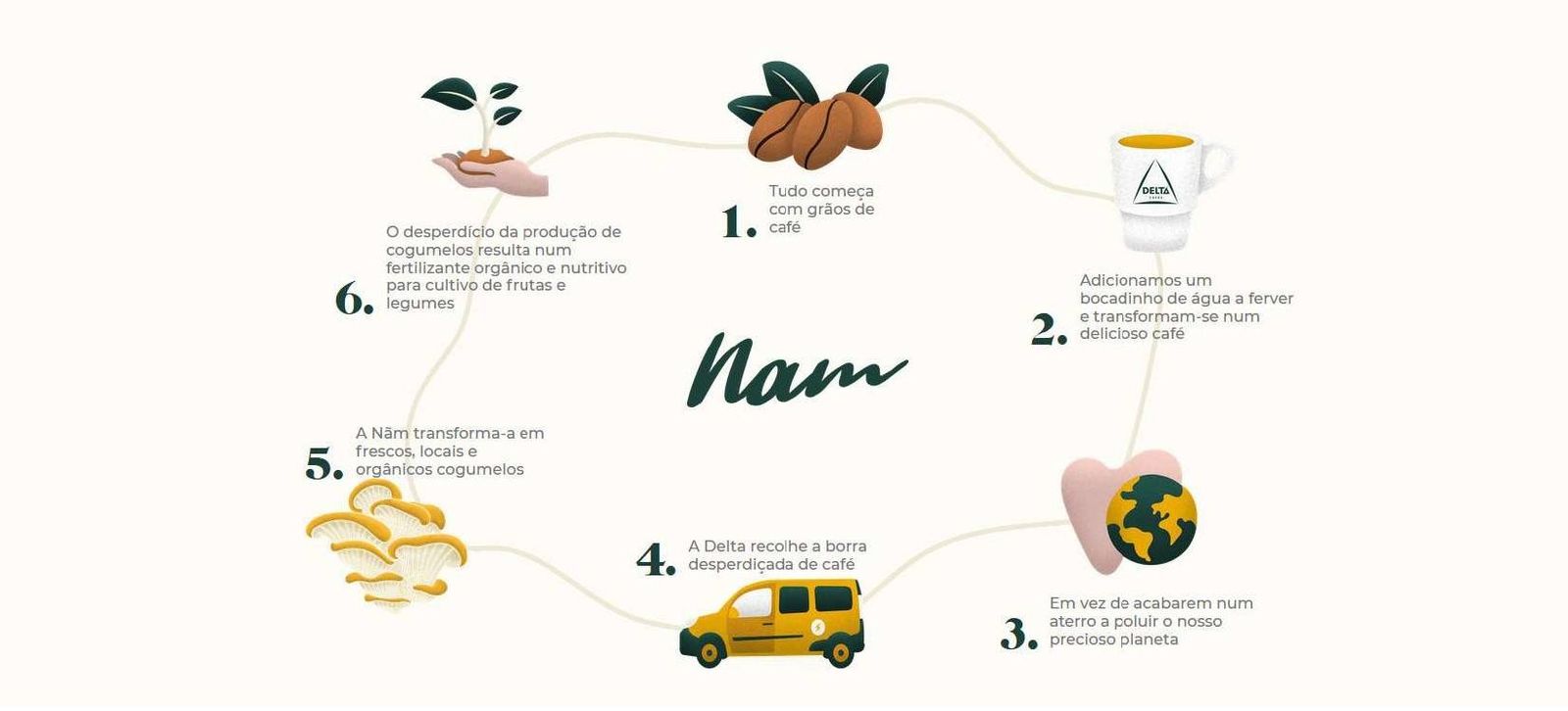
Nãm is a small urban farm in the heart of Lisbon that uses coffee grounds (a waste product) to produce mushrooms. The mushrooms are purchased by local restaurants, thus avoiding CO2 emissions during transport to the place of consumption. Nãm has a partnership with Delta and they have worked together to build a farm that transforms 3 tonnes of coffee grounds (or 36 tonnes a year!) into 1 tonne of mushrooms a month (or 12 tonnes a year!). It also generates 4 tonnes of natural fertiliser per month (the bags in which the mushrooms are grown, with coffee grounds, mycelium and straw). The partnership with Delta means that no additional CO2 is emitted to collect the coffee grounds, as they are collected by Delta's vans, which fill the coffee vending machines every day and are taken to Delta's premises, where the urban farm is located. Nãm is Lisbon's first urban farm, which will change the way we see waste and reconnect us with our food. We only use what is available locally, thus protecting our planet. From coffee waste, we produce delicious mushrooms and quality fertiliser.
Top SDGs

Project information
- Municipality:
- Lisboa
- Promoter:
- Company
Indicators (3)
Reciclagem de borras de café (toneladas por mês)
Evita-se a produção de um resíduo, utilizando a matéria orgânica contida nas borras de café para a produção de cogumelos.

Reciclagem de borras de café (toneladas por mês)
Evita-se a produção de um resíduo, utilizando a matéria orgânica contida nas borras de café para a produção de cogumelos.
Produção de cogumelos através da reciclagem das borras de café (toneladas por mês)
A matéria orgânica contida nas borras de café vai ser degradada pelo micélio, que a utiliza para a produção de cogumelos.

Produção de cogumelos através da reciclagem das borras de café (toneladas por mês)
A matéria orgânica contida nas borras de café vai ser degradada pelo micélio, que a utiliza para a produção de cogumelos.
Produção de fertilizante natural (toneladas por mês)
No final obtém-se um fertilizante natural (o que resta nos sacos onde são criados os cogumelos) constituído por borras de café, micélio e palha.

Produção de fertilizante natural (toneladas por mês)
No final obtém-se um fertilizante natural (o que resta nos sacos onde são criados os cogumelos) constituído por borras de café, micélio e palha.